
On 8 September 2026, Parliament passed amendments to Singapore’s collective sale framework that will lower the consent threshold for older developments once the changes come into effect.
The changes address two longstanding challenges. Sales Committees often fall just short of the 80% consent threshold, sometimes by only a few percentage points, while owners face years of uncertainty when attempts fail. The amendments lower the consent threshold for older developments while raising the hurdle for initiating a sale attempt and extending the cooling-off period after an unsuccessful exercise.
We believe the reforms could increase the number of successful collective sales. If that occurs, the resulting release of capital is likely to support demand for Singapore’s scarce landed housing stock over the next three to five years.
To assess the potential impact, we examine the regulatory changes, historical precedents in Singapore and Hong Kong, and the current en bloc pipeline.
The Upcoming En Bloc Reforms
The amendments is expected to introduce three key changes:
CSA consent threshold, by development age
| Development age | Previous | New |
|---|---|---|
| Under 10 years | 90% | 90% (unchanged) |
| 10 to 39 years | 80% | 80% (unchanged) |
| 40 to 59 years | 80% | 70% |
| 60 years and above | 80% | 65% |
EGM and CSA process
| Step | Previous | New |
|---|---|---|
| Owner support to requisition the first EGM | 20% by share value or 25% by unit count | 35% by share value or unit count |
| CSA signature collection window | 12 months | 6 months |
| Moratorium after a failed attempt | 2 years | 3 years |
While the higher EGM threshold may reduce speculative attempts, the lower consent requirements significantly improve the chances of success for older developments.
Why Could This Affect the Landed Market?
A successful en bloc sale converts an illiquid property asset into cash. Many owners subsequently re-enter the residential market, and those receiving larger payouts often consider landed homes.
The impact is unlikely to be immediate. A typical collective sale process, from formation of a Sales Committee to completion, can take six to eighteen months. Redeployment of sale proceeds may take longer. As such, any effect on the landed segment is more likely to emerge over a three-to-five-year period.
Case Study 1 : Hong Kong’s Reduction in En Bloc Thresholds
A useful reference is Hong Kong’s Land (Compulsory Sale for Redevelopment) Ordinance.
Prior to 2010, most redevelopment applications required 90% ownership consent. Following amendments that expanded the use of an 80% threshold, the number of compulsory sale applications increased significantly.
Between 1999 and 2010, only 85 applications were filed, averaging about eight per year. Between 2011 and July 2021, applications rose to 304, or approximately 29 per year. This represents roughly 3.5 times the previous annual volume.
While Hong Kong and Singapore have different legal frameworks, the case demonstrates that lowering consent thresholds can materially increase redevelopment activity.
Case Study 2: Singapore’s 2016-2018 En Bloc Cycle
Singapore’s most recent major collective sale cycle generated approximately $20.6 billion in transactions between 2016 and 2018.
A study cited by JLL tracked the outcomes of around 7,000 homeowners who benefited from the cycle. Payouts broadly fell into four categories:
| Payout | Share of owners | What the study and examples show |
|---|---|---|
| Up to $2M | 39% | Often downsized or bought resale HDB flats |
| $2M to $3M | 32% | Bought replacment condominiums |
| Above $3M | 29% | Landed was an upgrade option, along with larger or better-located condos |
Importantly, 29% of beneficiaries received more than $3 million. This group had the financial flexibility to consider landed homes, larger private residences, or investment properties.
The key takeaway is not that all beneficiaries purchased landed homes, but that a meaningful share suddenly became capable of doing so.
How Large Is the Effect?
The key question is whether the reforms will generate sufficient liquidity to influence the landed market in a meaningful way. While precise outcomes are impossible to predict, the current en bloc pipeline suggests the effect could be material, particularly because many of the developments most likely to benefit from the lower consent thresholds are freehold estates with relatively high expected payouts.
The table below lists the en bloc sales that are ongoing or expected in 2026:
| Development | Tenure | Reserve price | psf ppr | Average payout |
|---|---|---|---|---|
| High Point (D9) | Freehold | $580M | $2,641 | $9.8M |
| Trendale Tower (Cairnhill) | Freehold | $168M (guide) | $2,248 | $9.3M |
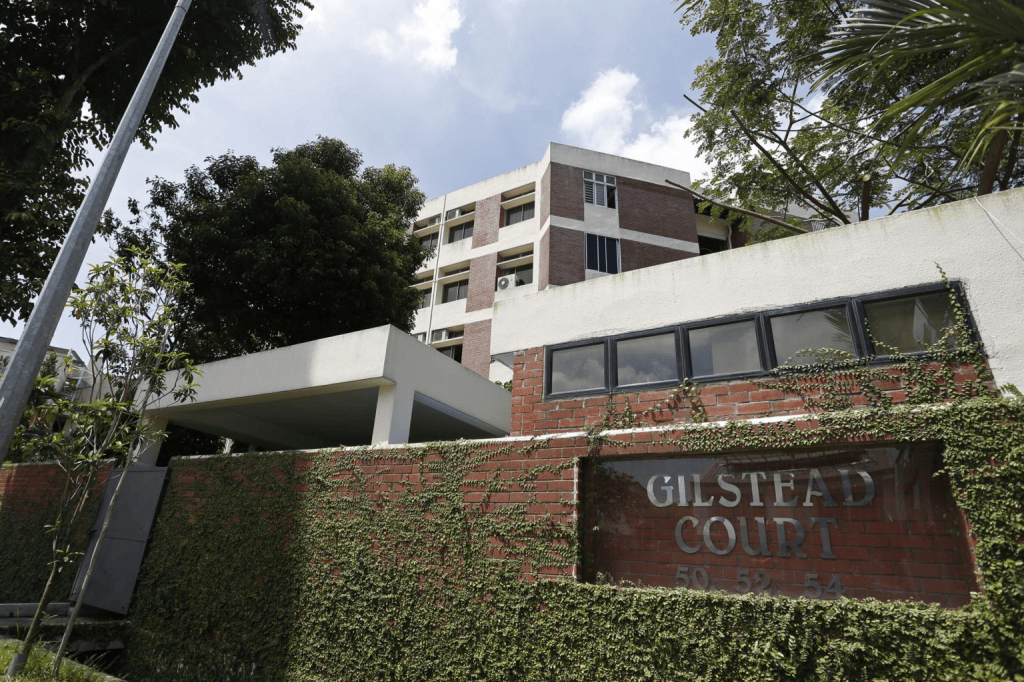
| Gilstead Court (D11) | Freehold | $198M | $1,874 | $4.1M |
| Hong Heng Garden (D26) | Freehold | $130M | $1,128 | $4.2M |
| Balestier Regency (D12) | Freehold | $255M (guide) | $1,473 | $3.5M |
| Serenity Park (D28) | Freehold | $440M | $1,453 at $505M | $2.5M |
| Loyang Valley | 99 years from 1982 | $880M | $940 | $2.4M |
| Lakeside Towers | 99 years from 1975 | $350M | $1,277 | $2.4M |
| Pine Grove | 99 years from 1986 | $1.78B | $1,355 | $2.7M |
The distinction between freehold and leasehold developments is notable. Five of the six freehold projects in the sample generate average estimated payouts exceeding $3.5 million per unit, compared with roughly $2.4-$2.7 million for the leasehold projects.
According to Huttons’ analysis, 223 developments fall within the newly affected 40-59 year age band, and approximately 79% of these are freehold. This suggests that many of the estates most likely to benefit from the lower threshold are also the estates most likely to generate larger cash payouts.
Consequently, the next en bloc cycle may produce a greater proportion of beneficiaries capable of purchasing landed homes than was observed during the 2016-2018 cycle.
Conclusion
The upcoming reforms are likely to increase the probability of collective sales among older developments, particularly ageing freehold estates. If more of these sites successfully sell, substantial amounts of capital will be released into the residential market.
Historical evidence from both Hong Kong and Singapore suggests that lower consent thresholds can increase redevelopment activity and create a pool of homeowners with significant liquidity. Given the high proportion of freehold developments within the newly affected age bands, a meaningful share of those beneficiaries may view landed property as their next housing upgrade.
In a market where landed housing supply remains structurally limited, even a moderate increase in demand could provide additional support to prices over the medium term.
Invest in Singapore’s Landed Housing Market
DC13 Development is a Singapore-based boutique real estate developer focused on acquiring, developing, and delivering quality developments.
Our investment thesis is centred on one of Singapore’s most limited asset classes: landed housing. If you are interested in Singapore’s landed residential market, we welcome conversations with accredited investors, institutional investors, family offices, and strategic capital partners.
This article is for general information only and does not constitute financial, investment or legal advice.
DC13 Development engages only with Accredited Investors and Institutional Investors for investment opportunities.
Sources
- New law proposed to lower en bloc thresholds for older condominiums
- TRIBE: 223 older developments in the 70% band
- DCC: Hong Kong compulsory sale regime revamped
- The Peak: JLL study of the 2016 to 2018 en bloc cycle
- Tracy Goh: Loyang Valley sale
- Tracy Goh: High Point, Hong Heng Garden, Serenity Park, Balestier Regency, Lakeside Towers
- EdgeProp: Gilstead Court
- Stacked Homes: Trendale Tower
- AsianPrime: Pine Grove


Leave a Reply